

Aquaculture as a guardian of rivers and seas.
We are a 100% sustainable aquaculture that guarantees fish of the highest quality.
Aquaculture as a guarantee for the survival of our marine ecosystems.
Aquaculture, or fish farming, is the production of fish and plants in fresh or salt water using techniques designed to make more efficient use of natural resources.
Compared to land-based farming, aquaculture offers a number of advantages that we at RIVERFRESH champion and try to convey to our consumers, so that they can share with us what this type of fish farming really is and demonstrate that it will guarantee the continued existence of our marine ecosystems.

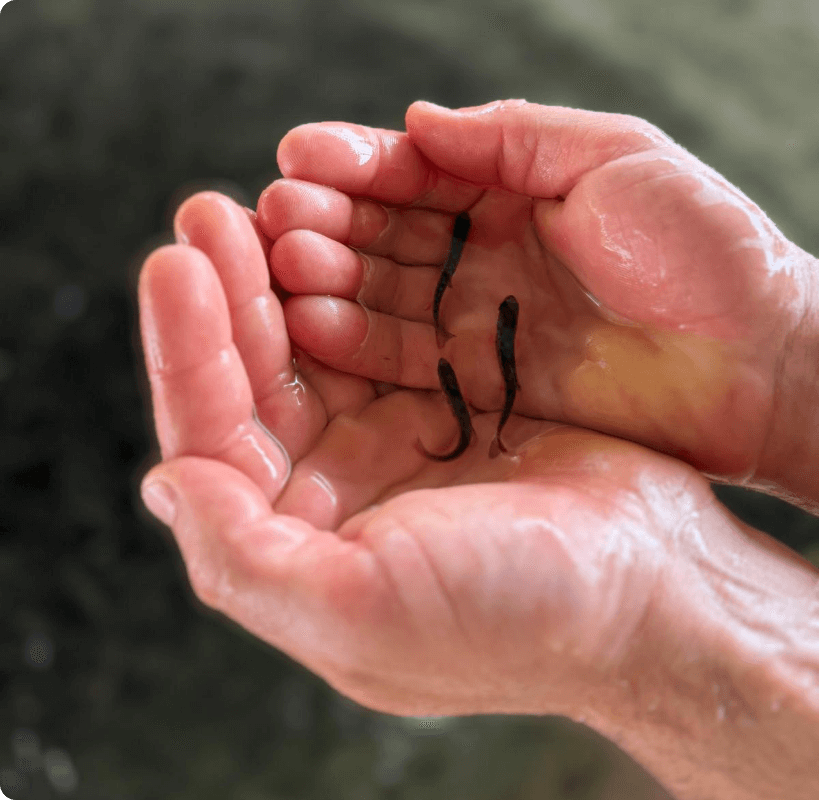
What is the Blue Revolution?
The challenge of feeding the world sustainably requires looking to the future and optimising the way we produce food from the sea. At RIVERFRESH, we are part of the answer to this demand.
The term ‘blue revolution’ refers to the increase in aquaculture as a widespread and highly productive activity that has taken place over the last 30 years throughout the world.
The growth of this activity has been based on the development of more effective breeding and fattening technologies, from the implementation of animal improvement programmes, the use of new species, improved feed, new farming techniques, etc.
Why RIVERFRESH?

9 billion people
worldwide by 2050.
With greater demand for fish products per capita (from 5.2 kg in 1961 to 18.8 kg in 2013) and extractive fishing production stagnating since the 1980s.

Marine resources
are being depleted.
Aquaculture should grow to meet this increasing demand. This would transform the sector into one that focuses its efforts on sustainability, as is already the case with agriculture today.

2014 marks
a milestone.
In 2014, the contribution of the aquaculture sector to the supply of fish for human consumption surpassed that of fish caught in the wild for the first time.
Advantages of farm-raised fish.
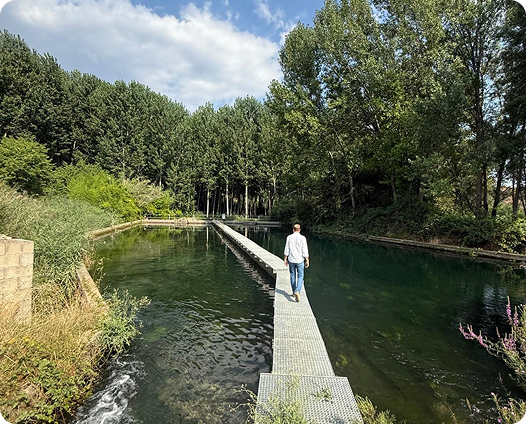
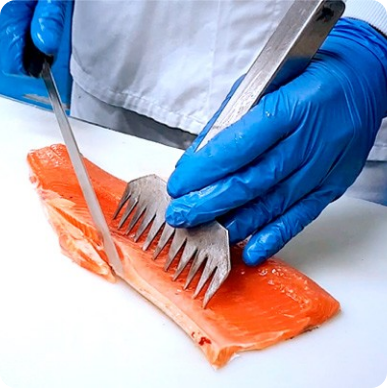
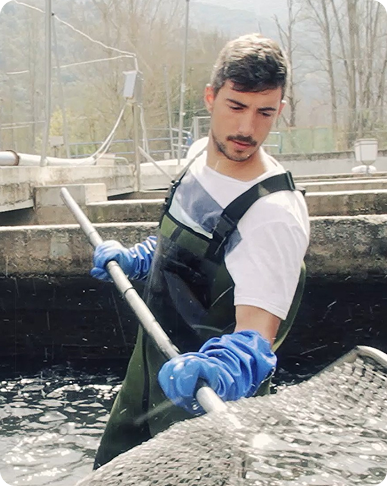
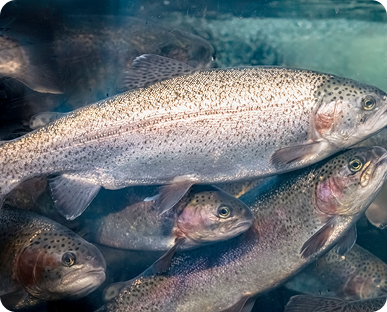
In recent years, there has been a notable increase in awareness of anisakis, which makes our product an even higher-quality food, as river fish CANNOT contain anisakis, since it is an issue exclusive to marine fish.
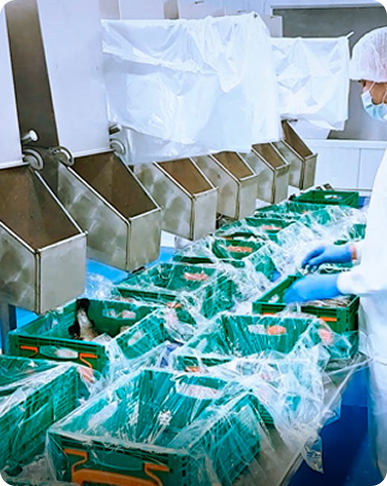
We can state unequivocally that locally farmed fish, compared with traditionally caught marine fish, offers a greater guarantee of the freshness of the food we eat. Thanks to our proximity and security of supply, we are able to anticipate our customers’ needs to ensure the product reaches their homes as fresh as possible, minimising the time between leaving our facilities and being eaten at home.
Aquaculture advantages VS Livestock farming
- Less feed is needed to produce a kilo of fish than to produce a kilo of any other land animal.
- Greater diversity of farmed species compared with land-based agriculture and livestock farming.
- It does not involve consuming freshwater (not even in the case of freshwater aquaculture, where it is used, but not consumed).
- Unlike cattle, they do not produce greenhouse gases.
- Water covers three quarters of our planet; therefore, aquaculture has a major advantage over land-based production systems, where the “soil” resource is limited and there is strong competition for its use.
- It plays an increasingly important role in protecting the environment and conserving natural areas.
Aquaculture advantages VS Wild capture fisheries
- A guarantee of freshness.
- A steady supply, free from seasonal fluctuations.
- Food safety and hygiene standards through the ongoing monitoring and analysis of the fish and their feed, reflected in full traceability.
- Product quality, sustainability, satisfaction and stable prices.
- Reduced pressure on wild populations. Elimination of discards caused by catching undersized animals or species other than the target.
- Greater oversight by the authorities of the activity’s impact on the environment.
Quality, food safety and sustainability as a commitment and the cornerstone of our company policy.


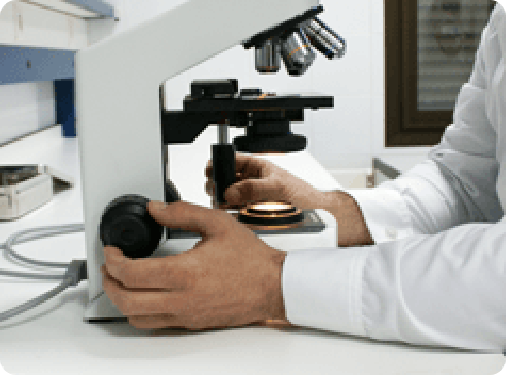
Continuous
quality improvement.
As a result of our continuous improvement policy, we comply with the most demanding certifications, both nationally and internationally.
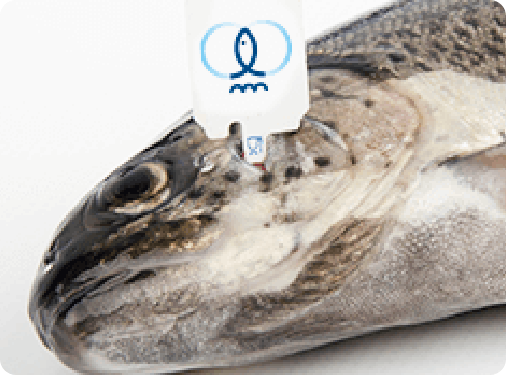
Food
safety.
Producing products through careful working methods and processes.
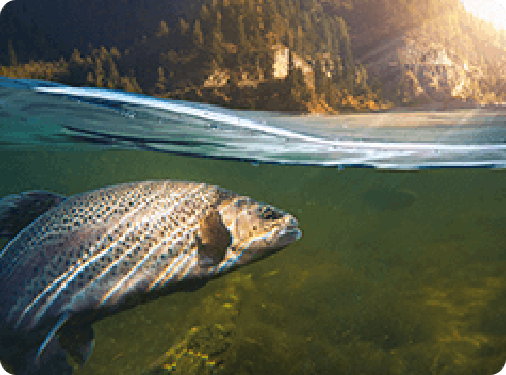
Environmental protection
and sustainability.
A fundamental pillar of the project, on which we base our belief in the strong need to conserve the environment.